
Best overall for solo freelance work: a sole proprietorship. Best for a separate legal entity: a private company, or (Pty) Ltd. Best for shared ownership: a partnership. Your choice in South Africa in 2026 depends on liability, client requirements and the administration you can maintain.
- Best business structure for a freelancer South Africa: choose a sole proprietorship for solo work with straightforward administration.
- Choose a private company for separate legal identity, while accounting for director duties and personal guarantees.
- Choose a partnership for shared ownership, with a written agreement covering responsibilities and departures.
- Express Reg provides company registration and compliance services; SARS tax obligations need separate attention.
Why your business structure matters
Your business structure determines who signs client contracts, who owes business debts and how you report income. A trading name does not create a separate legal entity. Registering a company does, but the company then carries its own filing and record-keeping obligations.
For your 2026 decision, separate incorporation from tax registration and ongoing compliance. Express Reg provides company registration and compliance services as a private consultancy. It has no affiliation with a government authority.
A sole proprietorship suits a freelancer working alone who accepts personal liability and wants fewer company-law formalities. Choose a company because its legal structure fits your work, rather than because the name looks more established.
Selection criteria for freelance business structures
Use these criteria before comparing structures. A recommendation only helps if it matches the contracts you sign and the responsibilities you can carry.
- Liability: Identify whether you or a separate entity owes business debts. Check personal guarantees and professional exposure alongside the structure.
- Ownership: Decide whether you will work alone or share ownership. Hiring a subcontractor does not itself require shared ownership.
- Client requirements: Read procurement conditions before registering. A client's requirement for an incorporated supplier can determine your choice.
- Administration: Account for bookkeeping, tax returns and, for companies, CIPC filings and beneficial ownership reporting.
- Tax treatment: Compare your circumstances with a tax practitioner. Incorporation does not establish that your total tax liability will fall.
Freelance business structures at a glance
| Structure | Best for | Standout feature | Key limitation |
|---|---|---|---|
| Sole proprietorship | Solo work with straightforward ownership | You operate the business in your own legal capacity | You carry personal liability for business debts |
| Private company, (Pty) Ltd | Separate legal identity and formal ownership | The company contracts and holds assets in its own name | Company filings and director duties continue after registration |
| Partnership | Shared ownership between freelancers | Partners agree how to contribute and share profits | An ordinary partnership exposes partners to personal liability |
The table compares legal structures, not tax outcomes. You still need to check the registrations, professional rules and contractual conditions that apply to your work in 2026.
1. Sole proprietorship: best for straightforward solo freelancing
A sole proprietorship lets you trade as an individual without incorporating a company at CIPC. You and the business remain the same legal person, even if you use a trading name. You report business income through your individual tax affairs.
A sole proprietorship has 1 owner. You can engage employees or subcontractors without giving them ownership, but those arrangements bring their own contractual, tax and employment questions.
Sole proprietorship advantages
- You avoid company incorporation and the CIPC filing duties that attach to a registered company.
- You retain ownership and decision-making authority without a shareholder agreement.
- You can organise contracts, invoices and bookkeeping around your own trading activity.
Sole proprietorship limitations
- You remain personally liable for business debts and contractual obligations.
- You cannot issue shares to bring another person into the same sole proprietorship.
- You must meet a client's incorporated-supplier requirement through another suitable arrangement.
Sole proprietorship compliance
Keep records of income, allowable business expenses and supporting documents. Business income remains taxable even if you have no company registration certificate. Check whether provisional tax, VAT or employer registrations apply to your circumstances.
Use a written contract that identifies you as the supplier and records any trading name. Separating business transactions from household spending also makes bookkeeping clearer, although a separate account does not create legal separation.
Best for: A freelancer who works alone, has no incorporated-supplier requirement and understands the personal liability involved.
Verdict: Choose a sole proprietorship for straightforward solo work after reviewing your contractual exposure.
2. Private company: best for a separate legal identity
A private company registered with CIPC exists separately from its shareholders. The company can enter contracts and own assets in its own name. A South African private company requires at least 1 director and can have a single shareholder.
Separate legal personality matters when you want the business, rather than you as an individual, to hold its contracts and assets. It also gives you a shareholding structure for ownership changes. You must then manage the company as a separate entity.
Private company advantages
- The company holds its own rights and obligations, subject to the law and its contracts.
- Shares provide a formal way to record ownership and bring in another shareholder.
- Incorporation meets a requirement for a registered company where a client specifies that condition.
Private company limitations
- You must maintain company records, CIPC annual returns and applicable beneficial ownership filings.
- Personal guarantees and certain director conduct can expose you to personal liability.
- Company tax and your own tax affairs require separate attention.
Private company compliance
For a company operating in 2026, CIPC compliance and SARS compliance form separate workstreams. Filing an annual return with CIPC does not replace the company's income tax return. Keep company records and assess any financial reporting obligations that apply.
Ask a tax practitioner to assess how you will receive money from the company. Salary and dividends have different tax consequences. A company supplying your personal services also needs an assessment of SARS personal service provider rules where relevant.
Express Reg offers company registration and ongoing compliance support. Confirm the scope of the services you select, including the filings covered and the records you must provide.
Best for: A freelancer who needs separate legal identity, formal share ownership or an incorporated supplier, and can maintain the associated duties.
Verdict: Choose a private company when legal separation or ownership requirements justify its continuing administration.
3. Partnership: best for shared ownership between freelancers
A partnership lets 2 or more partners carry on a business together under an agreement. Partners agree their contributions and how they will share the business's profits. An ordinary partnership does not provide the company-style separation described above.
Use a partnership for shared ownership and decision-making. A project collaboration can instead use a subcontracting agreement if one freelancer contracts with the client and engages the other to deliver defined work.
Partnership advantages
- Partners can combine skills and contributions under an agreed ownership arrangement.
- A partnership agreement can allocate responsibilities, decision-making and profit shares.
- Partners can run a shared business without incorporating a private company.
Partnership limitations
- Partners face personal liability for partnership obligations under the applicable legal rules.
- A partner's actions within their authority can bind the partnership.
- Departures and disagreements require careful handling through the agreement and applicable law.
Partnership compliance
Write the partnership agreement before accepting shared client work. Cover contributions, drawings, decision-making, client ownership, intellectual property and the process for a partner leaving. Obtain legal advice on authority to sign contracts and commit the partnership.
Partnership income flows through to partners for income tax purposes according to their entitlement. Assess VAT and employer obligations separately where they apply. Shared bookkeeping must support the partnership's transactions and each partner's tax reporting.
Best for: Freelancers who intend to own and manage one business together, rather than cooperate on occasional assignments.
Verdict: Choose a partnership only after agreeing ownership, authority, liability and departure terms in writing.
The basis for these recommendations
The ranking favours a sole proprietorship for uncomplicated solo ownership, a private company for separate legal identity and a partnership for shared ownership. Each recommendation follows the liability, ownership, client, administration and tax criteria above.
Your contract can change the result. An incorporated-supplier condition favours a company, while a shared project alone does not establish a need for a partnership.
Choose your structure before signing the next contract
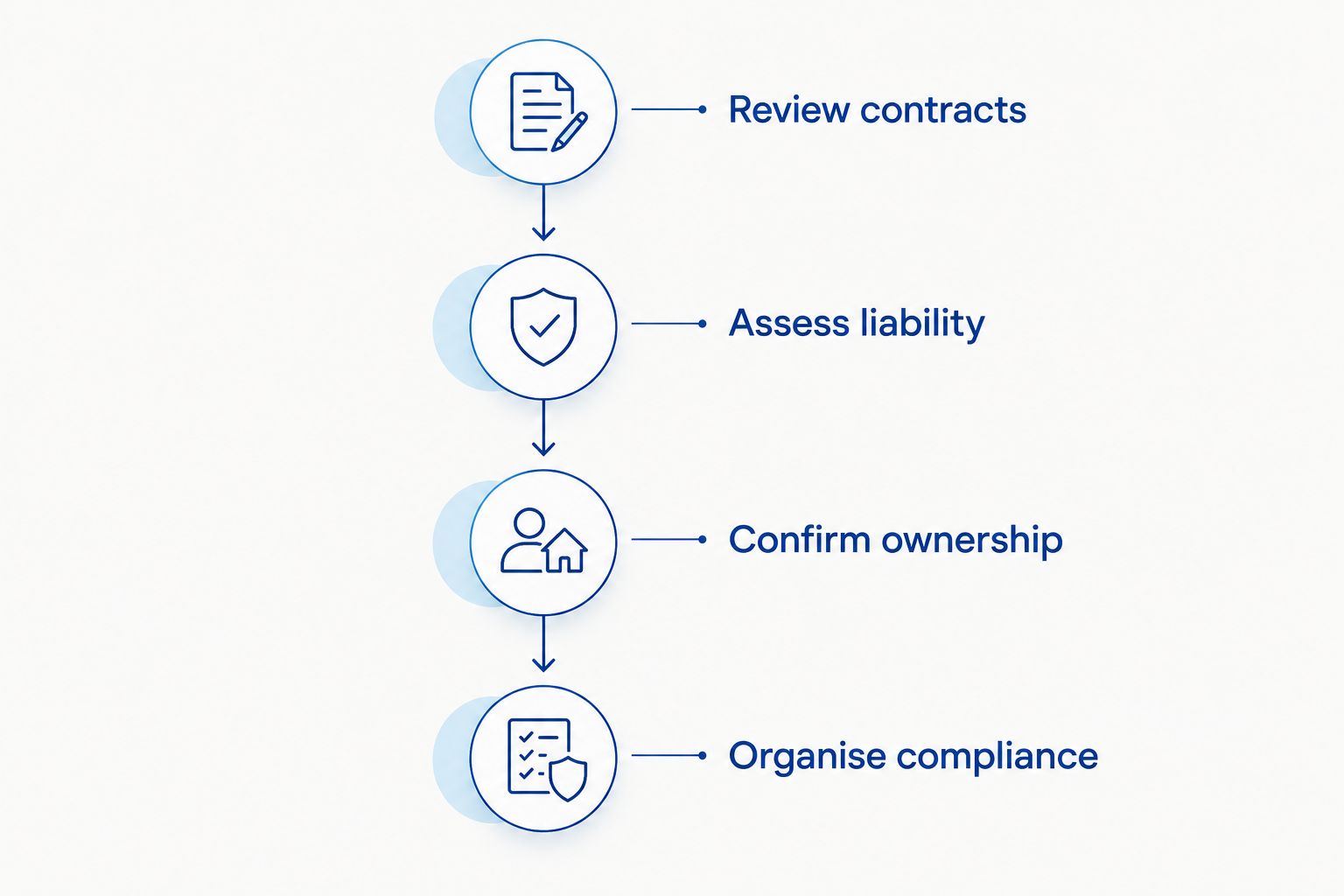
Use this sequence for your 2026 decision. Start with the work and the parties responsible for it, then organise registration and records around the structure you choose.
- Review contracts: Identify the contracting party, indemnities, guarantees and any incorporated-supplier requirement. Check professional registration or insurance conditions too.
- Assess liability: List the obligations you would accept personally. Consider contract terms and appropriate insurance alongside incorporation.
- Confirm ownership: Decide whether another person will own part of the business or deliver work under a service agreement.
- Organise compliance: Assign responsibility for bookkeeping, tax and any CIPC filings before work starts.
Keep evidence of the decision with your business records. For a company, identify which duties you will handle and which services you will appoint someone to provide. Express Reg's company registration and compliance services can support that process, but you still need to understand your responsibilities as a director.
Discuss your company registration requirements
Review company registration and compliance services for your freelance business.
Avoid these mistakes before registering
Choosing a company for a presumed tax saving. Ask a tax practitioner to compare business income, expenses, other income and the way you intend to withdraw funds. A company tax rate alone does not describe your total tax position.
Treating incorporation as complete liability protection. Read guarantees, indemnities and professional obligations before signing. A company structure does not cancel a personal undertaking you give to a client, landlord or lender.
Registering without allocating filing duties. Put CIPC and SARS tasks into your 2026 compliance calendar. Record who prepares each submission, who approves it and where you will keep confirmation.
Giving a collaborator ownership without an agreement. Define whether the relationship involves shared ownership or purchased services. Put payment, intellectual property and departure terms in writing before a dispute makes them urgent.
FAQ
Is a sole proprietorship the best business structure for a freelancer in South Africa?
A sole proprietorship suits a freelancer working alone who accepts personal liability and wants fewer company-law formalities. A private company fits a need for separate legal identity or an incorporated-supplier requirement.
Do I need to register a company before freelancing?
You can freelance as a sole proprietor without incorporating a company at CIPC. You must still meet applicable tax, professional and contractual requirements.
Can I register a private company on my own?
A South African private company can have a single shareholder and requires at least one director. You still need to maintain company records, CIPC filings and applicable SARS compliance.
Does a private company protect all my personal assets?
A private company provides separate legal personality, but personal liability can still arise. Personal guarantees and certain director conduct require particular attention.
Will a company reduce my freelance tax?
Company registration does not establish that your total tax liability will fall. Ask a tax practitioner to assess company tax, the way you receive funds and any relevant personal service provider rules.
Should two freelancers form a partnership for one project?
Two freelancers can use a subcontracting arrangement for a project without sharing ownership. A partnership suits an intention to own and run a business together and needs a written agreement.
Can I move from sole proprietorship to a company later?
You can incorporate a company after trading as a sole proprietor, but incorporation does not transfer the existing business arrangements by itself. Review contracts, assets, banking and tax consequences before changing the supplier named on invoices.
One last thing
Before moving existing freelance work into a company, check the supplier named in each client agreement. A new company has its own legal identity, so a registration certificate alone does not transfer your contracts to it. Confirm any required client consent and arrange the change before issuing company invoices.
For your 2026 choice, keep the decision narrow: ownership, liability and client requirements first, then tax and compliance planning. This is general information; obtain advice on the contracts and tax circumstances that apply to you.