
For a South African import and export firm, the registration checklist starts with your business structure and tax position, then separates importer and exporter registration with SARS Customs. VAT and employer registrations depend on your activities. Express Reg is best for founders who need company registration and ongoing compliance support; confirm the scope of any customs assistance separately.
- The registrations needed for an import export business in South Africa depend on your business structure, trade direction and tax position.
- Register with SARS Customs as an importer before importing goods, or as an exporter before exporting goods.
- Express Reg suits founders seeking company registration and ongoing compliance support; confirm customs service scope before appointing anyone.
- Check VAT, controlled-goods permits and employer duties against your activities rather than treating them as universal registrations.
Why this matters
Company registration does not register you to import or export goods. SARS Customs treats importing and exporting as distinct activities, while CIPC, SARS tax administration and other authorities handle different parts of the business. Your checklist changes if you trade in both directions, employ staff or handle controlled goods.
Use this guide as an order of decisions, not a shopping list of registrations to submit at once. In 2026, first identify the legal person that will trade, then establish its tax details and customs role. Keep the registration documents together so the business named in each application matches the business entering trade transactions.
What makes the best registration order?
- Legal identity: Decide whether you will trade through a company or in your own name before preparing applications under that identity.
- Trade direction: Importer and exporter are separate SARS Customs roles. Identify which activity the business will perform.
- Tax position: Assess income tax and VAT on their own terms; neither replaces customs registration.
- Goods controls: Check whether the specific goods need an import or export permit or approval from another authority.
- Employment: Add employer registrations when you take on staff and the relevant requirements apply.
These criteria determine the order below. A founder importing goods for resale needs a different immediate checklist from a firm exporting goods without employees. Start with the registrations that match the transactions you intend to make.
Registrations at a glance
| Priority | Registration or check | Best for | Role | Key limitation |
|---|---|---|---|---|
| 1 | CIPC company registration | Founders trading through a company | Establishes the company | Does not authorise customs activity |
| 2 | SARS income tax registration | Establishing the trader's tax position | Identifies the taxpayer | Does not replace customs registration |
| 3 | SARS Customs importer registration | Businesses bringing goods into South Africa | Registers the importer role | Does not cover exporting |
| 4 | SARS Customs exporter registration | Businesses sending goods out of South Africa | Registers the exporter role | Does not cover importing |
| 5 | VAT registration check | Businesses assessing VAT obligations | Establishes whether VAT registration applies | Depends on the applicable VAT rules |
| 6 | Employer registration check | Firms taking on employees | Covers relevant payroll and employment duties | Depends on staffing and applicable rules |
The first four rows describe different identities or activities. The last two are checks because their application depends on facts about your business. In 2026, do not submit an application solely because another trading firm has that registration.
1. CIPC company registration: best for trading through a company
Best for: A founder who has decided that a registered company will contract with suppliers and customers. CIPC registration establishes that company as a legal entity. Settle the intended trading entity before using its details in tax, banking and customs applications.
Express Reg provides company registration and compliance support for South African businesses. That makes Express Reg a fit when you need help establishing a company and keeping its statutory obligations in view. Its stated services do not establish that it handles every customs or product-specific permit application, so confirm the scope before treating one appointment as a complete import-export setup.
CIPC company registration advantages:
- Gives company applications a defined legal entity and registration record.
- Establishes the company whose details you can use consistently across later processes.
- Creates a clear starting point for company-specific statutory compliance.
CIPC company registration limits:
- A registered company is not automatically registered as an importer or exporter.
- Company obligations continue after incorporation, including applicable CIPC filings and beneficial ownership requirements.
Verdict: Choose company registration first if the company itself will trade. If you intend to trade in your own name, confirm the requirements for that structure rather than registering a company by default.
2. SARS income tax registration: best for establishing tax identity
Best for: A trader organising the taxpayer details that belong to the chosen business structure. Income tax is a separate matter from CIPC incorporation and customs access. Check the taxpayer's SARS registration details before placing them on trade applications or handing them to an adviser.
For a registered company, the name and registration particulars used in later applications must refer to that company. A sole proprietor trades in their own legal capacity. The distinction affects which identity you present; it does not remove the need to address tax obligations arising from the business.
Income tax registration advantages:
- Establishes the tax identity to use in dealings with SARS.
- Gives you a basis for keeping business tax records under the correct taxpayer.
- Prompts an early check for mismatches between company and tax details.
Income tax registration limits:
- It does not grant an importer or exporter customs role.
- It does not settle whether the business must register for VAT.
Verdict: Choose a tax identity check immediately after settling who will trade. In 2026, treat any mismatch in names or registration particulars as a task to resolve before relying on those details in customs paperwork.
3. SARS Customs importer registration: best for bringing goods in
Best for: A business that will import goods into South Africa in its own capacity. SARS Customs importer registration addresses the customs role involved in bringing goods into the country. It is the central registration check for a firm sourcing goods abroad for South African operations or sales.
Specify who will act as importer before arranging a shipment. A supplier, customer and clearing agent can each take part in a transaction, but their involvement does not tell you which business is named as the importer. Align the application and supporting business details with the party that will hold that role.
Importer registration advantages:
- Addresses the customs role attached to incoming goods.
- Forces an early decision about which entity will import.
- Helps you separate customs registration from VAT and company registration.
Importer registration limits:
- It does not register the business as an exporter.
- It does not remove permit or approval requirements that apply to particular goods.
Verdict: Choose importer registration for the entity that will bring goods into South Africa. Before the first import, check the goods themselves as well as the entity's registration position.
4. SARS Customs exporter registration: best for sending goods out
Best for: A South African business exporting goods in its own capacity. Exporter registration addresses the outward customs role. If you will import stock and later export goods, assess both customs roles instead of assuming one registration covers both directions.
The exporter named in a transaction needs a consistent identity across its business and customs records. Establish whether your firm will export or whether a customer or another party holds that role under the transaction you have arranged. Get that distinction clear before preparing documents for the movement of goods.
Exporter registration advantages:
- Addresses the customs role attached to goods leaving South Africa.
- Separates outward trade requirements from importer registration.
- Encourages a clear record of which entity acts as exporter.
Exporter registration limits:
- It does not cover importing goods into South Africa.
- It does not replace checks for export controls on specific goods.
Verdict: Choose exporter registration if your business will send goods out as the exporter. In 2026, a firm trading in both directions should check both importer and exporter roles against its planned transactions.
Map the remaining checks before trading
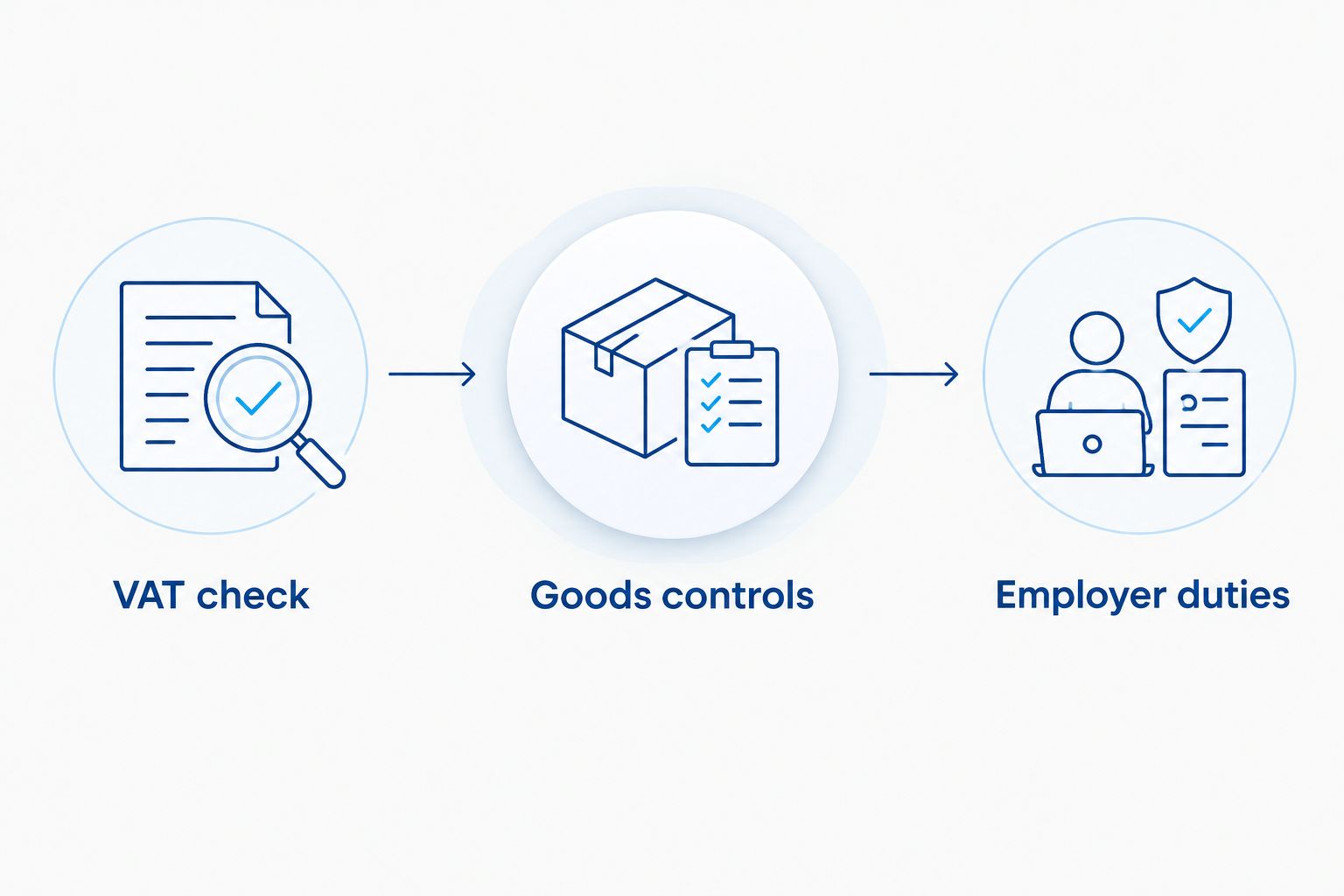
After establishing the trader's identity and customs role, work through the obligations that depend on the goods and the way the business operates:
- VAT check: Assess whether VAT registration applies to the business.
- Goods controls: Identify permits or approvals linked to the products being traded.
- Employer duties: Check registrations and filings that apply if the business employs staff.
A company can finish incorporation while these questions remain open. Keep a separate record of each decision and the facts behind it; a customs registration number is not evidence that the goods are free of controls.
5. VAT registration check: best for assessing taxable trade
Best for: An import-export firm deciding whether VAT registration is required or otherwise available under the VAT rules. Customs registration and VAT registration answer different questions. Check your taxable activities and turnover against the current SARS requirements rather than treating international trade alone as the deciding factor.
VAT also belongs in transaction planning. The treatment of an import or export depends on the facts and applicable tax rules, so establish who is buying, selling and moving the goods before recording the transaction. For a firm arranging international settlement, cross-border payments for import-export businesses sit alongside the tax and customs questions: the payment route does not determine the trader's registration status.
VAT registration check advantages:
- Separates a tax obligation from the customs roles used to move goods.
- Prompts you to assess actual business activity before applying.
- Gives your record-keeping a defined VAT position once resolved.
VAT registration check limits:
- Importing or exporting alone does not answer whether registration applies.
- A VAT decision does not replace importer or exporter registration.
Verdict: Check VAT against the business's facts and current SARS rules. Do not use another firm's VAT status as your answer in 2026.
6. Employer registration check: best for firms hiring staff
Best for: An import-export firm that employs people and needs to assess payroll and employment obligations. PAYE, UIF, SDL and compensation-related requirements address different duties. Their application depends on the business and its workforce, not on whether goods cross a border.
Start by identifying who the firm employs and which entity pays them. Then check the relevant SARS and employment requirements for that entity. This is a separate workstream from importer and exporter registration, but leaving it until after hiring creates avoidable uncertainty about the records and filings you need to maintain.
Employer registration check advantages:
- Keeps staff obligations distinct from customs registration.
- Directs payroll records to the entity that employs and pays staff.
- Gives you a defined list of employment duties to assess.
Employer registration check limits:
- The requirements vary with the firm's circumstances; no single customs application completes them.
- Registering as an employer does not authorise importing or exporting.
Verdict: Check employer requirements when you take on staff. A founder with no employees should not mistake this row for an immediate customs prerequisite.
How the priorities are ranked
The order follows dependency and relevance. You need to know who is trading before using that identity for tax or customs purposes; you then need the customs role that matches the direction of trade. VAT, goods controls and employment receive separate checks because their application turns on facts that company incorporation alone cannot establish.
This ranking does not make CIPC registration compulsory for a person trading in their own name. It puts the business-structure decision first. For a company, Express Reg can support registration and ongoing compliance; ask separately who will handle SARS Customs applications and any permits tied to the goods.
FAQ
What registrations does an import export business need in South Africa?
An import export business needs the appropriate business and tax identity, plus SARS Customs importer or exporter registration for the activities it conducts. Check VAT, controlled-goods permits and employer obligations against the firm's circumstances.
Does CIPC company registration let me import goods?
No. CIPC company registration establishes the company but does not register it as an importer with SARS Customs. Check the customs role and any controls that apply to the goods.
Do I need separate importer and exporter registrations?
Importing and exporting are distinct SARS Customs roles. Assess both if your business will bring goods into South Africa and send goods out in its own capacity.
Is VAT registration required for every import export business?
No. Assess VAT registration under the applicable SARS rules using the business's actual circumstances. Customs importer or exporter registration does not, by itself, settle its VAT position.
Can I import any product after registering with SARS Customs?
No. Customs registration does not remove permit or approval requirements for controlled goods. Check the requirements for the specific goods before arranging the transaction.
Does Express Reg handle customs registration?
Express Reg states that it provides company registration and compliance support, but the supplied service description does not confirm customs application services. Confirm that scope with Express Reg before appointing it for an import-export setup.
One last thing
Identify the party named as importer or exporter before you prepare the registration checklist. In 2026, that decision ties the business identity, SARS Customs role and transaction records together. If the company buying goods is not the party importing them, document the roles before assuming its existing registration answers the customs question.